
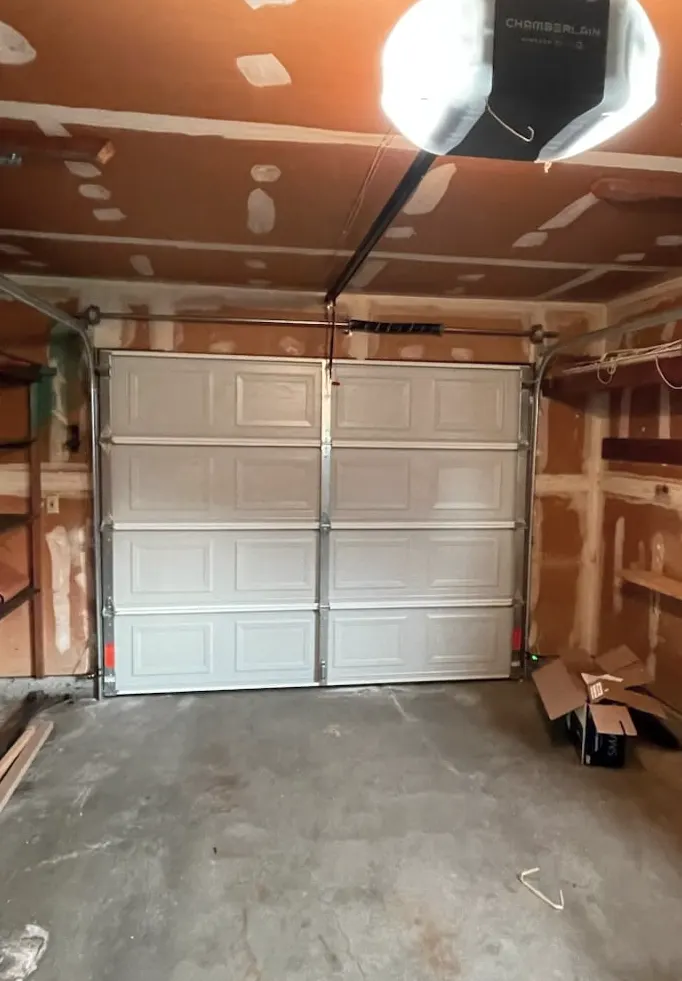
The Night the Opener Finally Gets on Your Nerves
It's usually not the door itself that pushes someone to replace an opener. It's the 11 p.m. grinding, chain-slap sound that rattles through the house every time someone comes home late. Or it's the opener that still works but groans louder every month, and you start wondering if it's about to leave you stuck outside during the next afternoon downpour. Once you notice the noise, you can't un-notice it, and that's usually when homeowners start asking what the other options actually are.
There are four main drive types on the market: chain, belt, screw, and direct-drive. They all do the same basic job, but they differ a lot in noise, price, and how long they hold up in Florida's heat and humidity.
Chain Drive
This is the opener most people grew up with, and it's still the most common one installed today because it's affordable and strong.
- Noise: The loudest of the four. A metal chain pulls the trolley along a metal rail, so you get a mechanical rattle and clank with every open and close. Noticeable in a garage under a bedroom or near a shared wall.
- Price: Typically the cheapest option, often a few hundred dollars less than belt or direct-drive units at the same horsepower.
- Lifespan: Solid, often 10-15 years with regular lubrication. The trade-off is maintenance: the chain needs periodic lubrication and tension checks, and in a humid climate like ours, an unlubricated chain will start to show surface rust faster than you'd expect.
- Good fit for: Detached garages, garages where noise doesn't matter much, and budget-focused installs on heavier doors.
Belt Drive
Same basic mechanism as a chain drive, but the chain is swapped for a reinforced rubber or polyurethane belt.
- Noise: Noticeably quieter. No metal-on-metal contact, so you get a smooth hum instead of a clank. This is the usual recommendation for garages attached to living space or near bedrooms.
- Price: A step up from chain drive, usually by a modest margin for comparable horsepower.
- Lifespan: Comparable to chain drive, often 10-15 years. Belts hold up well in humidity since there's no metal chain to rust, though extreme heat over many years can gradually dry out and crack older belt material.
- Good fit for: Attached garages, homes with a bedroom above or next to the garage, and anyone replacing a chain unit specifically to cut down on noise.
Screw Drive
Instead of a chain or belt, a threaded steel rod turns to move the trolley. Fewer moving parts than the other two.
- Noise: Moderate. Quieter than chain, louder than belt, with a steady whirring sound rather than a clank.
- Price: Mid-range, similar to or slightly above belt drive.
- Lifespan: This is where local climate matters most. Screw drives rely on consistent lubrication of the threaded rod, and temperature swings between a hot afternoon and a cooler, damp evening can affect how smoothly the mechanism runs. In humid conditions, the rod needs more frequent lubrication than the manufacturer's minimum schedule suggests, or it will start to bind and strain the motor.
- Good fit for: Garages that stay at a fairly stable temperature, and homeowners willing to keep up with lubrication a couple of times a year.
Direct-Drive
The newest and simplest design. The motor itself moves along a stationary chain or rail, instead of pulling a trolley along a track. Fewer parts means fewer things to wear out.
- Noise: The quietest option by a clear margin. Often used specifically for garages that double as workshops, home gyms, or sit under a primary bedroom.
- Price: The most expensive upfront, but often comes bundled with battery backup and smartphone connectivity as standard features.
- Lifespan: Tends to outlast the other three because there are fewer moving parts to wear, rust, or stretch. A real advantage in a climate where metal components are more exposed to rust and swelling from moisture.
- Good fit for: Homes prioritizing quiet operation and long-term reliability over upfront cost, and anyone who wants battery backup built in for storm season power outages.
What We'd Recommend for Most Homes Here
For a typical attached garage in this area, a belt drive hits the best balance: quiet enough not to disturb the house, priced reasonably, and it avoids the chain-rust issue that shows up in humid, salt-tinged air near the coast. If your garage sits away from living space and budget is the priority, chain drive still does the job reliably as long as you keep it lubricated. Direct-drive is worth the extra cost if you want the quietest possible setup or you want built-in battery backup heading into hurricane season, since losing power doesn't have to mean losing the ability to open your garage door. Screw drive makes sense mainly for detached garages with stable temperatures, where the maintenance routine is easier to keep up with.
Whatever drive type you choose, make sure the opener's horsepower and reinforcement match your door. Heavier wind-rated doors built for storm season put more strain on an undersized opener, which shortens its lifespan regardless of drive type.
When to Call Casselberry Garage Door Repair
If your current opener is grinding, slipping, or struggling to lift the door smoothly, it's worth having it looked at before it fails completely, often during a storm when you need it most. We handle Garage Door Opener Installation for all four drive types and can walk you through which one fits your garage, your door weight, and your noise tolerance. If the opener itself is fine but the door is the real issue, our Garage Door Tune-Up & Maintenance service checks springs, cables, rollers, and track alignment so the opener isn't working harder than it should.
If you're in Casselberry, Altamonte Springs, Winter Park, Fern Park, Longwood, Winter Springs, Maitland, or Oviedo and your opener is making you wince every time it runs, give Casselberry Garage Door Repair a call. We'll size it up, give you a straight answer, and get it fixed or replaced right.